University of Nottingham to lead £13.6m clean energy and manufacturing projects
Three University of Nottingham projects will help businesses develop clean energy products and adopt digital and low-carbon manufacturing.
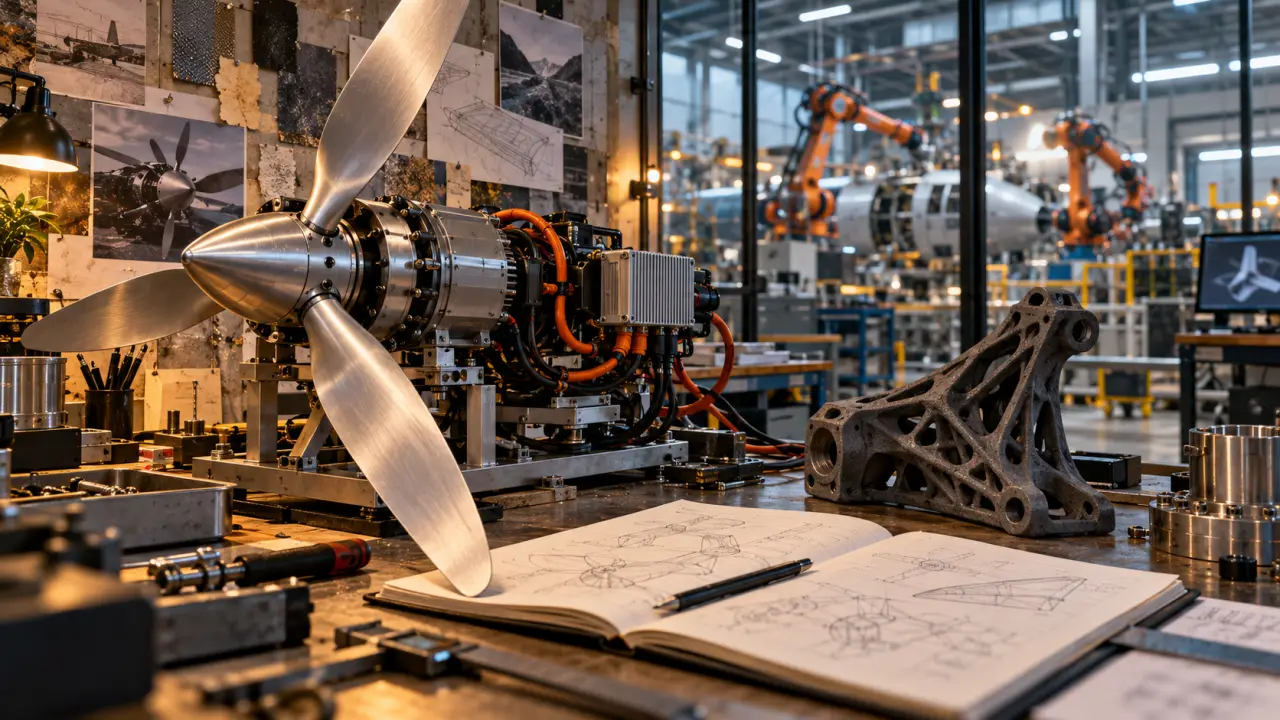
East Midlands manufacturers and start-ups are set to receive help developing clean energy products and changing production methods through three University of Nottingham projects worth £13.6 million.
The work is part of a £20 million regional programme expected to start later in 2026. Businesses wanting to take part can approach the university’s business engagement team.
From new ideas to factory production
The university’s Faculty of Engineering will lead three strands, each aimed at a different point in bringing technology to market.
The Advanced Manufacturing and Clean Energy (AMaCE) Accelerator will help entrepreneurs, start-ups and university spin-outs turn research into products that can succeed commercially.
The Next Generation Single-Aisle (NGSA) Hybrid-Electric Propulsion Challenge will demonstrate and test propulsion technology against requirements from major aircraft manufacturers.
Regional suppliers will also receive support through the Connected Factories Programme to adopt automation, digital systems and lower-carbon manufacturing, including methods for making new products at scale. This project has a further £3.2 million allocation through the East Midlands Investment Zone initiative.
Regional investment and jobs forecasts
UK Research and Innovation is funding the wider Advanced Manufacturing for Clean Energy programme, which is led by the East Midlands Combined County Authority. It forms part of the government’s £500 million Local Innovation Partnerships Fund.
The University of Derby will lead the fourth project, INFINITY. Nottingham Trent University, Loughborough University and industry partners are also involved.
The university forecasts that the overall programme could generate £325 million to £340 million in gross value for the East Midlands economy during its lifespan and support up to 1,775 jobs. At least £36 million of private investment is expected alongside public funding.
Professor Tom Rodden, the University of Nottingham’s Pro-Vice-Chancellor for Research and Knowledge Exchange, said the university would draw on its manufacturing and transport decarbonisation expertise to accelerate technologies capable of attracting investment and creating growth.
Manufacturing employs 11% of the East Midlands workforce. Across the wider Midlands, aerospace businesses account for 30% of the UK total and support more than 56,000 jobs.